

PRODUCTS

Wear resistant and corrosion-resistant HDPE board with multiple colors and sizes
Category:
HDPE Products
WhatsApp:
Email:
keywords :
HDPE Products
Product Introduction
**Antistatic HDPE Board**
Antistatic HDPE (High-Density Polyethylene) boards have gained significant attention in various industries due to their unique properties and versatility. This article delves into the characteristics, applications, and benefits of antistatic HDPE boards, providing a comprehensive overview of why they are becoming a preferred choice in many sectors.
**Understanding Antistatic HDPE Boards**
Antistatic HDPE boards are specially formulated sheets made from high-density polyethylene, designed to prevent the accumulation of static electricity. The addition of antistatic agents during the manufacturing process gives these boards their unique properties, making them suitable for environments where static discharge can be detrimental. Static electricity can lead to equipment malfunctions, product damage, and safety hazards, making the use of antistatic materials crucial in certain applications.
One of the key features of antistatic HDPE boards is their ability to dissipate static charges. Unlike regular HDPE, which can build up static electricity, antistatic HDPE boards allow for the controlled dissipation of charges, thereby reducing the risk of electrostatic discharge (ESD). This property is particularly important in environments such as electronics manufacturing, clean rooms, and laboratories.
**Key Characteristics of Antistatic HDPE Boards**
Antistatic HDPE boards exhibit several essential characteristics that make them suitable for various applications:
1. **Durability**: HDPE is known for its toughness and resistance to impact, chemicals, and moisture. Antistatic HDPE boards retain these properties, making them durable and long-lasting.
2. **Lightweight**: Compared to other materials, HDPE boards are lightweight, making them easy to handle and transport. This feature is particularly beneficial in industries where mobility and ease of installation are critical.
3. **Chemical Resistance**: Antistatic HDPE boards are resistant to a wide range of chemicals, including acids, bases, and solvents. This makes them ideal for use in laboratories and industrial environments where chemical exposure is a concern.
4. **Easy to Clean**: The smooth surface of antistatic HDPE boards allows for easy cleaning and maintenance. This is particularly important in environments where hygiene and cleanliness are paramount.
5. **Customizability**: Antistatic HDPE boards can be manufactured in various sizes, thicknesses, and colors, allowing for customization to meet specific project requirements.
**Applications of Antistatic HDPE Boards**
The versatility of antistatic HDPE boards enables their use in a wide range of applications across various industries:
1. **Electronics Manufacturing**: In the electronics industry, the prevention of static electricity is crucial. Antistatic HDPE boards are commonly used as work surfaces, storage containers, and packaging materials to protect sensitive electronic components from ESD.
2. **Clean Rooms**: Clean rooms require materials that minimize contamination and static buildup. Antistatic HDPE boards are often utilized in clean room environments for walls, floors, and equipment surfaces, ensuring a controlled atmosphere.
3. **Laboratories**: In laboratories, antistatic HDPE boards are used for countertops, workstations, and storage solutions. Their chemical resistance and easy-to-clean surfaces make them ideal for handling various substances safely.
4. **Industrial Applications**: Industries such as automotive, aerospace, and pharmaceuticals utilize antistatic HDPE boards for manufacturing, assembly lines, and product storage. Their durability and static-dissipating properties enhance safety and efficiency in these environments.
5. **Retail and Display**: Antistatic HDPE boards are also used in retail environments for displays and shelving units, where static electricity can affect electronic point-of-sale systems or product displays.
**Benefits of Using Antistatic HDPE Boards**
The use of antistatic HDPE boards offers several advantages:
1. **Enhanced Safety**: By preventing static electricity buildup, these boards significantly reduce the risk of sparks, explosions, and damage to sensitive electronic components, enhancing overall workplace safety.
2. **Cost-Effectiveness**: The durability and longevity of antistatic HDPE boards lead to lower replacement and maintenance costs over time. Their ability to withstand harsh conditions further adds to their cost-effectiveness.
3. **Improved Efficiency**: In environments where ESD is a concern, the use of antistatic HDPE boards can improve workflow efficiency by minimizing interruptions caused by static-related issues.
4. **Sustainability**: HDPE is a recyclable material, making antistatic HDPE boards an environmentally friendly choice. Many manufacturers offer options for recycled HDPE, contributing to sustainability efforts.
5. **Versatility**: With a wide range of applications across different industries, antistatic HDPE boards can be adapted to meet various needs, making them a versatile solution for many challenges.
**Conclusion**
Antistatic HDPE boards represent a significant advancement in materials used across various industries. Their unique properties, including durability, chemical resistance, and the ability to dissipate static electricity, make them essential in environments where static discharge poses risks. From electronics manufacturing to laboratory settings, the applications of antistatic HDPE boards are vast and varied.
The demand for antistatic HDPE boards is expected to rise as industries focus on safety and efficiency. Their cost-effectiveness, sustainability, and versatility make them a preferred choice for businesses addressing static-related issues. Understanding the benefits and applications of these boards allows organizations to enhance operational safety and efficiency.
Radiation shielding materials are mainly used for protection against neutrons and γ-rays, lead-containing, boron polyethylene is added to a certain content of lead, boron, etc. in ultra-high molecular weight polyethylene by high-temperature and high-pressure compression molding. Polyethylene can be added boron carbide, diboron trioxide, borax, boric acid, lead lithium carbonate and other multiple needs, the content of 2%-77% can be added; boron-containing polyethylene advantages of hydrocarbons, high hydrogen content, has a good ability to reduce the speed of boron absorbs heat, resulting in gamma radiation shielding is particularly effective, the lead is particularly effective in the protection of the Y radiation, which has the effect of shielding
Product Classification: boron containing polyethylene, lead boron polyethylene Boron Carbide Polyethylene Sheet, Anti-Neutron Shielding Material
Available: Lead/Boron/Boron Carbide Sheet, Shielding Room, Shielding Door, Shielding Enclosure, Processed Parts, etc.
Dimensions: Customizable
Application Fields: Spent Fuel Lattice Plate for HE Power Station, HE Power Vessel, Neutron Source Research, Petro-Chinese Petroleum, Military Industry, Laboratories, Hospitals, Industrial Detection and Other Research Fields
HDPE board (high-density polyethylene board) is a material widely used in industry and daily life. It is mainly made of high-density polyethylene and has excellent corrosion resistance, wear resistance and impact resistance. HDPE board is lightweight and has good UV resistance. It can be used for a long time in outdoor environments without degradation. In addition, the surface of HDPE board is smooth and easy to clean. It is often used in food processing and medical equipment and other places with high hygiene requirements.
HDPE board has various functions. In addition to being used as a building material, it can also be used to make various containers, pipes, partitions and protective facilities. Its superior physical properties make it widely used in water conservancy projects, chemical storage, agriculture and other fields. Especially in agriculture, HDPE board is often used for waterproofing and isolation of greenhouses, water storage tanks and farms to help improve production efficiency.
When using HDPE board, there are several precautions that need special attention. First, due to the large thermal expansion coefficient of HDPE board, it may deform in a high temperature environment, so a certain expansion joint must be left during installation. Secondly, try to avoid placing it in a strong acid or alkali environment to avoid affecting its service life. In addition, although HDPE board is impact-resistant, it may still crack under high-intensity impact, so it should be treated with care during transportation and use. Finally, try to choose HDPE board produced by regular manufacturers to ensure that its quality and performance meet the standards, thereby ensuring safety and effectiveness in use.
| Category | Item | Typical Value | Unit | Description |
| Basic Properties | Material | High-Density Polyethylene (HDPE) | - | Thermoplastic engineering plastic polymerized from ethylene monomers |
| Density | 0.941–0.965 | g/cm³ | Lighter than water; higher density indicates higher crystallinity, hardness, and rigidity | |
| Color | White, Black (common) | - | Other colors can be customized (advance notice required) | |
| Dimensions (Thickness×Width×Length) | 1–200mm×1000–2000mm×2000–6000mm | mm | Standard sizes; customized dimensions available (confirm with suppliers) | |
| Mechanical Properties | Tensile Strength (Yield) | ≥22 | MPa | Resistance to tensile fracture; higher values indicate stronger anti-deformation capability |
| Elongation at Break | ≥350 | % | Maximum elongation before fracture; HDPE’s excellent toughness suits impact-resistant scenarios | |
| Flexural Strength | ≥25 | MPa | Resistance to bending deformation | |
| Hardness (Shore D) | 60–70 | - | Hardness increases with density, suitable for different load requirements | |
| Water Absorption | ≤0.01 | % | Virtually water-insoluble, suitable for humid environments | |
| Chemical Properties | Corrosion Resistance | Excellent | - | Resistant to acids, alkalis, salt solutions, and most organic solvents (e.g., alcohol, gasoline); not resistant to strong oxidizers (e.g., concentrated nitric acid) |
| Solvent Resistance | Excellent | - | Insoluble in most solvents at room temperature | |
| Weather Resistance | Moderate (with anti-aging agents) | - | For long-term outdoor use, UV absorbers or carbon black are recommended to enhance weather resistance | |
| Thermal Properties | Melting Point Range | 125–135 | ℃ | Better heat resistance than LDPE, lower than PP |
| Continuous Service Temperature | -40 to 80 | ℃ | Does not embrittle at low temperatures (excellent low-temperature resistance); significant strength decline at high temperatures | |
| Heat Deflection Temperature (0.45MPa) | ≥70 | ℃ | Heat resistance under load | |
| Coefficient of Linear Expansion | (10–13)×10⁻⁵ | /℃ | Moderate dimensional stability with temperature changes; expansion gaps should be 预留 (reserved) | |
| Processing Properties | Molding Methods | Extrusion, Injection Molding, Machining | - | Can be thermally formed or mechanically processed (drilling, cutting, welding) |
| Weldability | Good (hot melt welding, electrofusion welding) | - | Same-material welding allows splicing with strength close to the base material | |
| Surface Treatment | Difficult to bond (requires flame treatment or primer) | - | Inert surface; special treatment needed before adhesion | |
| Application Fields | Typical Uses | Chemical containers, water treatment equipment, wear-resistant linings, food-grade pallets, packaging materials, cushion plates, etc. | - | Widely used for corrosion resistance, wear resistance, and low-temperature tolerance |
| Standards | Domestic Standards | GB/T 11116-1989, GB/T 4454-2008 | - | Standards for board dimensions and performance testing |
| International Standards | ASTM D4020, ISO 4726 | - | Reference for export products |
Factory inventory
Customer Service Praise

Packaging and shipping

Application Examples
The products are widely used in ports, electric power, petrochemical, laboratory, medical, coal, food, machinery manufacturing and transmission industries.
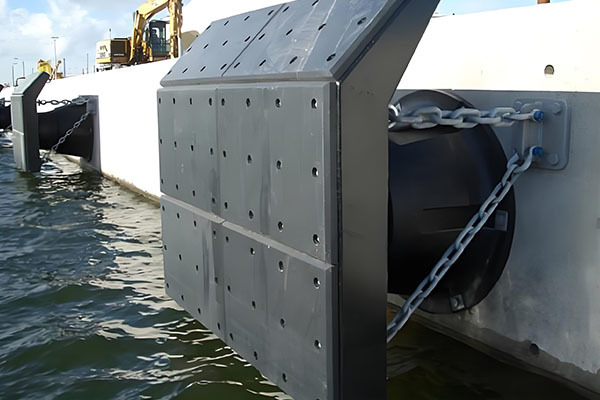
Fender Panel
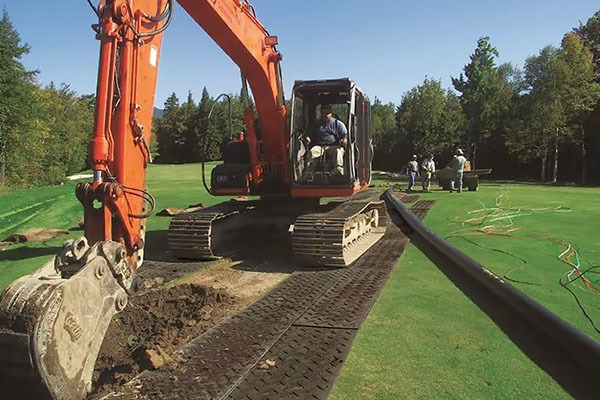
Temporary Road Mats
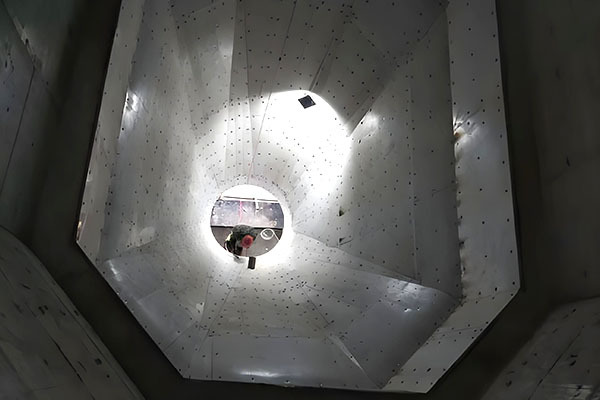
Coal Bunker Lining

Football Training Board

UHMWPE sheet
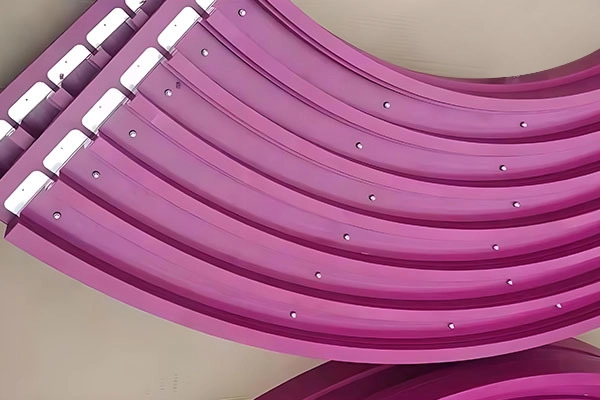
Ultra-high Processing Parts
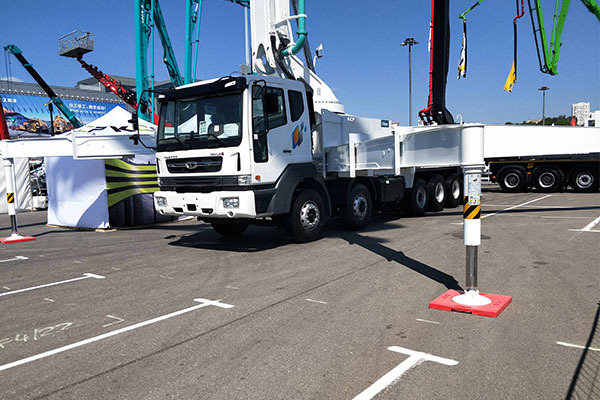
Outrigger Pads

Anti-ice Board
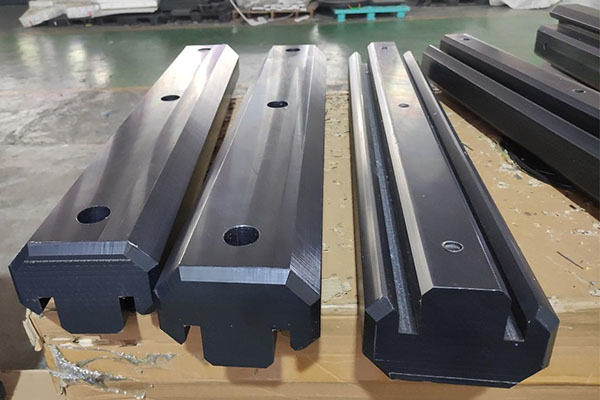
Sleeper

Frequently Asked Questions
— Does it support prepayment of deposit?
Sure, the specific amount will be negotiated based on the product and value of the goods
— Can we conduct an on-site inspection at the factory?
Of course, we always welcome overseas friends to conduct on-site inspections and taste local cuisine
— Does the company provide after-sales service?
It is necessary. We welcome customers to raise questions at any time, provide 24-hour online answers, discuss cooperation processes, product usage, etc
— Which port does the goods export from?
Generally, it is Tianjin Port, Qingdao Port, Shanghai Port, and can also be shipped from ports designated by customers
— Are you a factory or a trading company?
We are a wear-resistant material production factory with a large production plant in Ningjin, China
— Once the products received by customer were found not comply with the products or contract demands, what will you do?
We will compensate the customer for all the loss without any hesitation.
GET A FREE QUOTE
RELATED PRODUCTS
Connect with a professional plastics manufacturing factory
Let us tailor a solution for YOU.

CONTACT INFORMATION
Tel:+86 18053496514
WhatsApp:+86 18053496514
Email:kdn@kdnplastics.com
ADD:High Polymer Material Industrial Park, Ningjin County, Dezhou City, Shandong Province


Copyright ©